
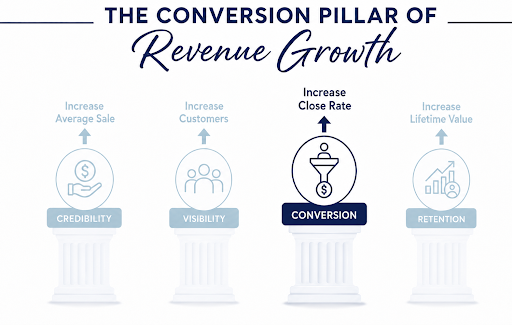
You’ve done the hard work.
People are finding your business.
They’re calling.
They’re filling out your contact form.
They’re asking for quotes.
In our previous article, The Cost of Being Invisible Online: How Being Found Leads to More Customers, we explored why visibility is essential for attracting potential customers. But once they find you, what happens next?
Not every lead becomes a customer.
That’s where conversion comes in.
The Revenue Impact
Conversion Helps You Earn More From Existing Opportunities
Generating more leads is not the only way to increase revenue. Sometimes the more immediate opportunity is improving what happens after someone visits your website, calls your business, or requests a quote.
Conversion does not create more attention. It helps more of the opportunities you have already earned become leads and customers.
Better Conversion → Higher Close Rate → More Revenue From Existing Opportunities
What Is Conversion?
Conversion is the process of turning interested prospects into paying customers.
Every phone call.
Every contact form.
Every estimate.
Every consultation.
Each one is an opportunity to earn a customer’s business.
Many business owners assume they need more leads to grow. Sometimes they do. But often, the biggest opportunity is converting more of the leads they already have.
When inquiries go unanswered, follow-up takes too long, or the buying process feels confusing, qualified prospects may move on. Improving conversion means removing those obstacles and making it easier for people to choose your business.
Ways to Improve Your Conversion Rate
Conversion isn’t about using high-pressure sales tactics. It’s about creating a smooth, trustworthy buying experience.
Conversion improves when each step between initial interest and a signed agreement feels clear, timely, and trustworthy.
Some of the biggest contributors include:
- Responding quickly to inquiries
- A clear and simple contact process
- Strong calls to action
- Easy-to-understand proposals and estimates
- Following up with prospects
- Consistent communication throughout the sales process
- A website designed to encourage action
- CRM and lead tracking systems
None of these elements work in isolation. Together, they create a better experience for your prospects and help turn more leads into customers.
Two Conversion Rates You Should Measure
Conversion can happen at more than one point in the buying process:
Website conversion rate: How many website visitors become leads.
Sales close rate: How many qualified leads become customers.
A business can lose revenue at either point. Measuring both makes it easier to see whether the problem is the website experience, the sales process, or both.
What Poor Conversion Could Be Costing You
Consider a service business receiving 500 website visitors per year.
At a 2% website conversion rate, 500 visitors produce 10 leads.
At a 5% website conversion rate, the same 500 visitors produce 25 leads.
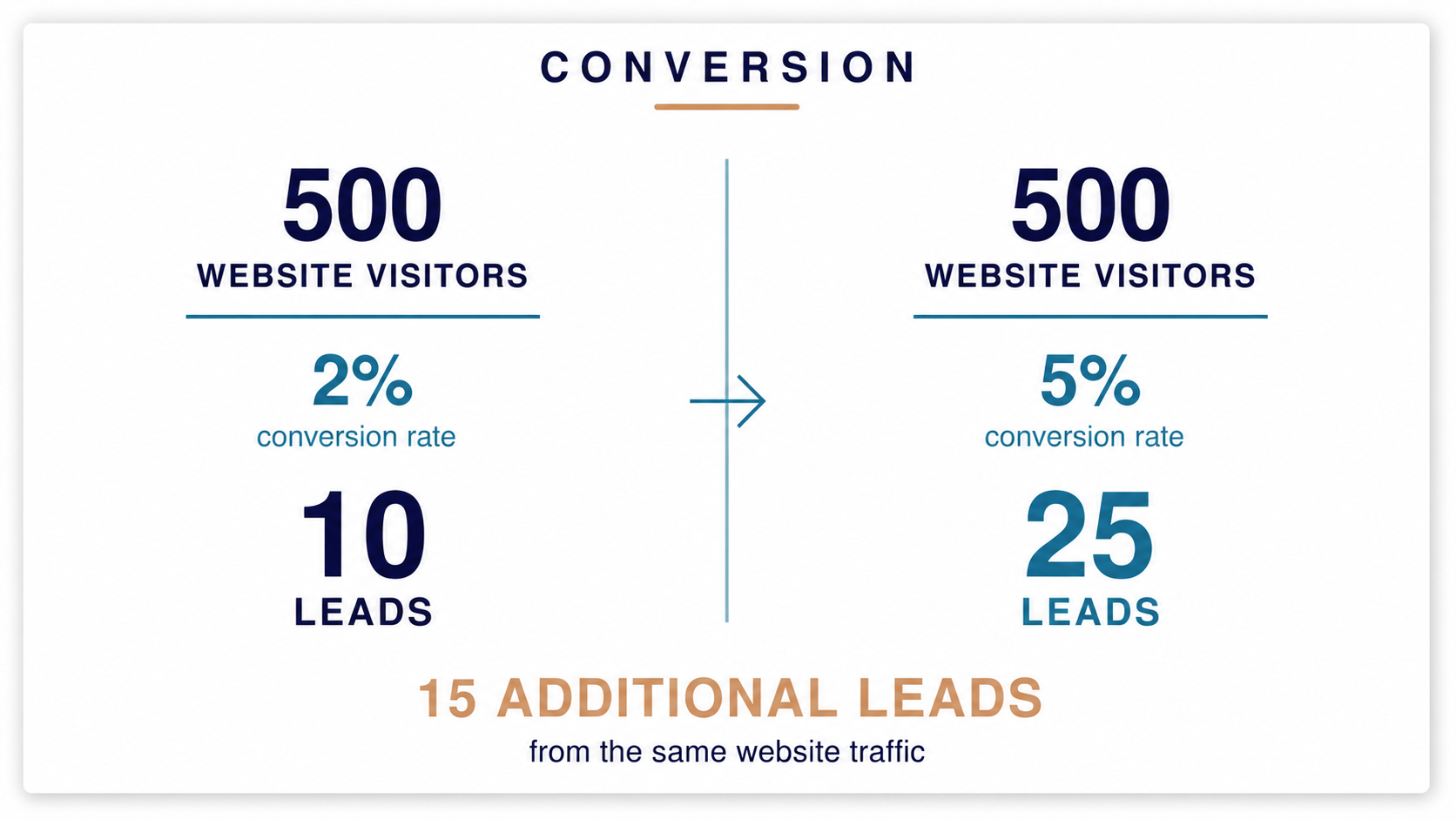
That is 15 additional leads without buying more traffic.
If the business closes 30% of those additional leads and has a $5,000 average sale:
15 additional leads × 30% close rate × $5,000 average sale = $22,500
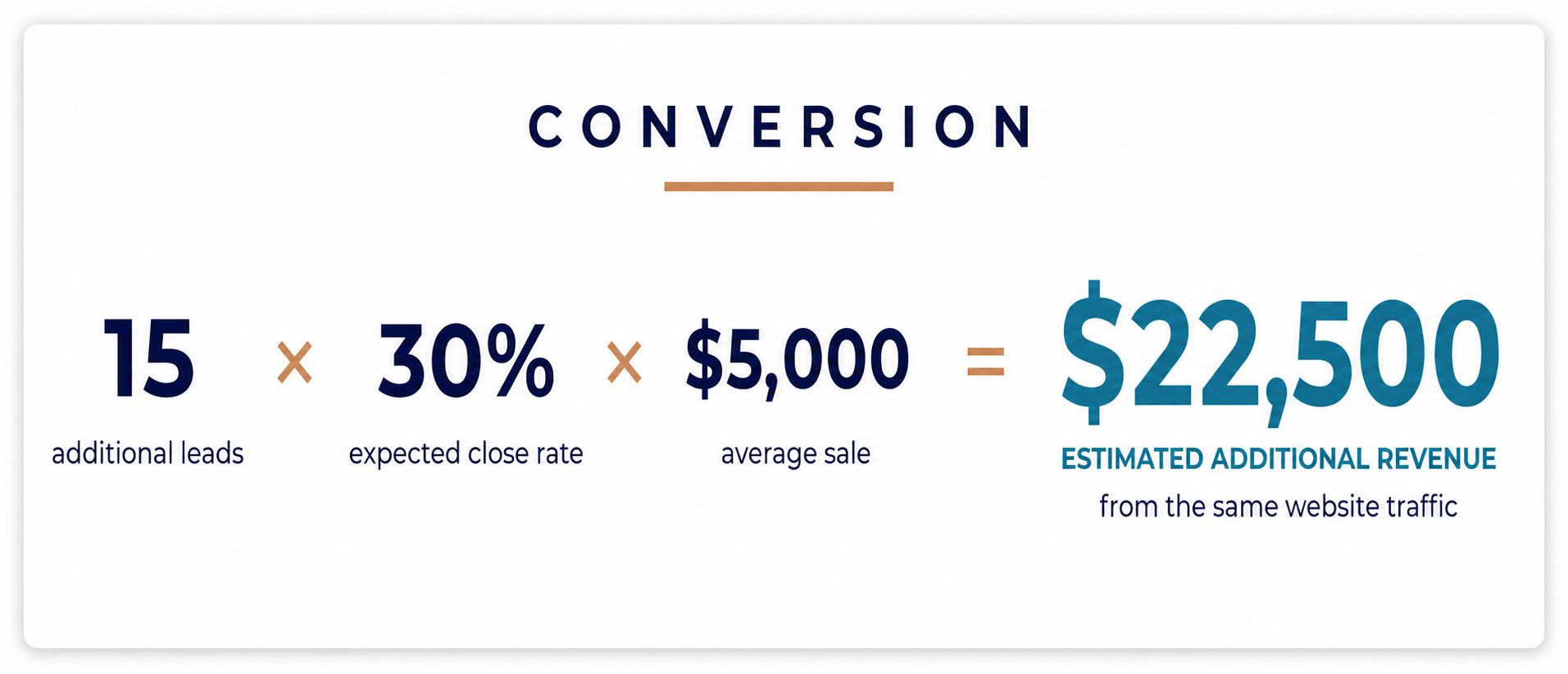
Potential Revenue Opportunity: $22,500 From the Same Website Traffic
This is an illustrative example based on the assumptions shown above. It is not a guarantee that every website can or will achieve a 5% conversion rate.
Use Your Own Numbers
Website Visitors × (Improved Conversion Rate − Current Conversion Rate) × Expected Close Rate × Average Sale = Estimated Additional Revenue
No additional advertising. No additional networking. No additional traffic. The business simply made better use of the opportunities it already had.
Why It Matters
Imagine two businesses receive 100 qualified leads.
One converts 20 into customers.
The other converts 30.
Neither business generated more leads.
Neither spent more on advertising.
The difference wasn’t visibility.
It was conversion.
Over time, that difference can lead to significant revenue growth.
How The Biz Spa Helps Improve Conversion
The Biz Spa Strategy Engine examines the complete path from initial interest to signed agreement. For a business in the Get Leads stage, that means identifying where qualified prospects encounter confusion, friction, delays, or inconsistent follow-up.
We evaluate the audience, Buyer’s Journey, messaging, website structure, calls to action, trust signals, response process, proposals, follow-up, and CRM tracking. The goal is not to pressure more people into buying. It is to create a clear, trustworthy experience that helps qualified prospects understand the value and confidently take the next step.
Before You Invest in More Traffic
If your business is receiving website visits, calls, or quote requests but cannot clearly see how many become leads and customers, you may be losing opportunities you have already worked to earn.
The Biz Spa Strategy Engine helps identify those gaps and determine what should be strengthened first. For a business in the Get Leads stage, that becomes a focused plan for improving website conversion, follow-up, tracking, and the overall buying experience.
Before spending more to generate additional attention, make sure your current opportunities have a clear path to becoming revenue.
In our next article, we’ll explore the fourth pillar of revenue growth: Retention, and why keeping customers longer is one of the most effective ways to build sustainable revenue.